
AGCO Supply Chain Control Tower Cost Management Case Study
by Divya
5/21/20263 min read
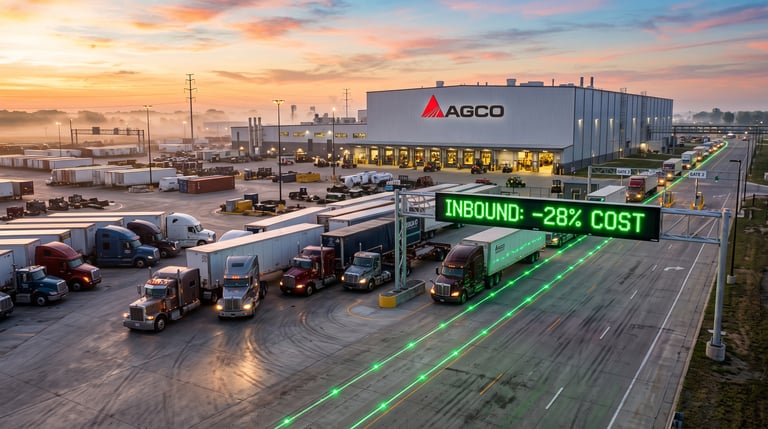
This case study evaluates how AGCO Corporation, a global leader in agricultural machinery manufacturing, resolved systemic inefficiencies caused by an acquisition-heavy growth strategy. Operating with five independent brands, AGCO’s decentralized logistics network created fragmented sourcing teams, disconnected software tools, and an expensive lack of shipping transparency.
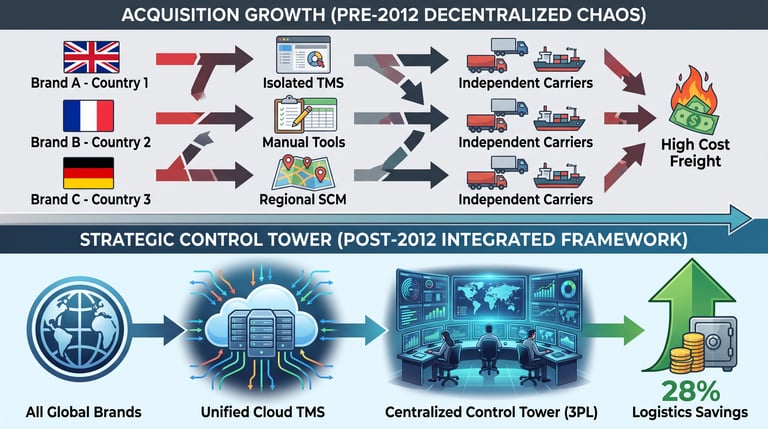
To resolve these issues, leadership launched a long-term strategic optimization program. By blending a globally integrated Transport Management System (TMS) with a centralized 3PL logistics control tower, AGCO transformed its siloed European network before scaling the framework worldwide. This structural re-engineering achieved an 18% reduction in freight costs within 18 months, an eventual 28% decrease in total inbound logistics expenses, a 25% jump in overall network performance, and a 25% drop in inventory levels.
AGCO expanded over two decades primarily through corporate acquisitions. While this strategy successfully built a vast multi-brand portfolio including Fendt, Massey Ferguson, and Valtra, it introduced severe operational friction.
Core Problems Identified
Fragmented Process Maturity: Sourcing and inbound logistics were managed by isolated teams across multiple countries, all utilizing completely different supply chain tools and systems.
The Logistics Blind Spot: Inbound logistics and everyday transport management operated as separate, uncoordinated fields. This created a lack of real-time shipping transparency.
Lost Sourcing Leverage: Because purchasing was decentralized, the enterprise failed to capitalize on volume synergies, corporate economies of scale, and carrier rate negotiation advantages.
Market Vulnerability: These structural weaknesses left the company highly vulnerable to a volatile, intensely seasonal agricultural market.
Following a formal Supply Chain Operations Reference (SCOR) benchmarking exercise, AGCO’s executive team established an integrated, long-term optimization program.
The Hybrid Technology and 3PL Strategy
Instead of relying solely on software or outsourcing operations completely, AGCO adopted a blended approach. They coupled a globally integrated Transport Management System (TMS) with a deep strategic partnership alongside a tier-one third-party logistics (3PL) provider.
The company piloted this framework in its complex European theater, designing and launching a centralized logistics control tower.
Control Tower Functional Architecture
The European logistics control tower serves as a single source of truth that integrates and manages the end-to-end inbound supply loop:
Rate Optimization: Centralized freight carrier rate negotiations to leverage corporate scale.
Dynamic Scheduling: Automated inbound shipment scheduling and continuous transport plan optimization.
Financial Automation: Automated freight auditing and carrier self-billing systems to eliminate invoicing errors.
Following the successful European pilot, AGCO rolled the standardized operating model out across its North American and Chinese business units.


SCOR Framework Alignment
AGCO's operational turnaround demonstrates the value of the Supply Chain Operations Reference (SCOR) model. This framework breaks supply chain performance down into five macro processes: Plan, Source, Make, Deliver, and Return.


AGCO used SCOR benchmarking to identify a gap in its Enable and Deliver categories. By deploying the control tower, they replaced fragmented regional systems with a standardized process engine. This allowed them to measure performance across all five brand networks equally.
Econometric Synergies and Economies of Scale
From an economic perspective, decentralized acquisitions often create diseconomies of scale due to redundant administrative overhead and fragmented buying power.
AGCO reversed this trend by centralizing its transport management. By consolidating carrier rate negotiations under one control tower, the company aggregated its total freight volume. This transformed a fractured group of mid-sized buyers into a single, high-volume shipper, forcing carriers to offer highly competitive contractual rates.
Takeaways
The AGCO business case provides key lessons for global operations executives:
Standardize Technology Before Scaling: True corporate synergy cannot happen when regional offices use disconnected software tools. A unified, global TMS is a prerequisite for network optimization.
Build Control Towers for Visibility: Centralizing logistics data inside an asset-light control tower gives managers real-time visibility. This allows them to optimize routes dynamically and reduce empty transport miles.
Mitigate M&A Supply Chain Risks Early: Growing through acquisitions increases operational complexity. Companies must intentionally design an integrated logistics network to prevent administrative bloat and margin erosion.
Contact
Questions? Reach out anytime.
© 2025 BizSphere. All rights reserved.