
How Wells Fargo’s Misaligned KPIs Triggered a Systemic Operational Crisis
by Divya
4/14/20262 min read


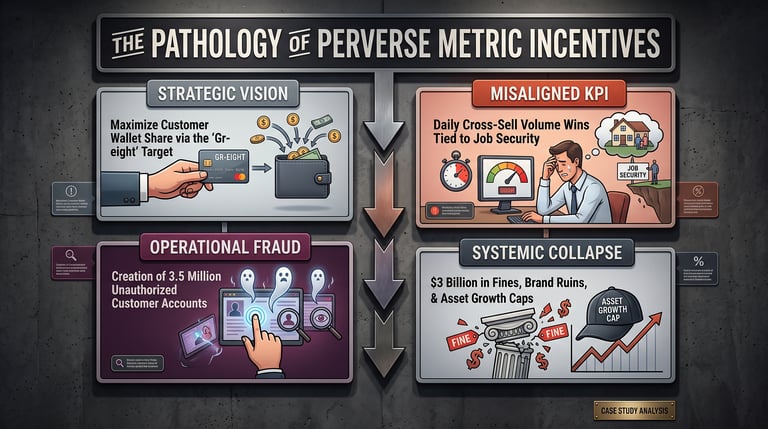
The cross-selling retail banking crisis at Wells Fargo stands as a classic corporate governance warning on the dangers of misaligned performance metrics. Senior leadership set a core strategic goal known as the "Gr-eight initiative" an ambitious push to cross-sell an average of eight distinct financial products to every individual banking customer.
However, by linking employee bonuses, promotions, and daily job security exclusively to this aggressive target, management unintentionally gamified its own retail network, driving a massive operational crisis.
The Strategic Breakdown: Goodhart’s Law in Practice
Wells Fargo’s leadership failed to balance its backward-looking sales numbers with forward-looking risk controls, violating the core balance principles of the Balanced Scorecard.
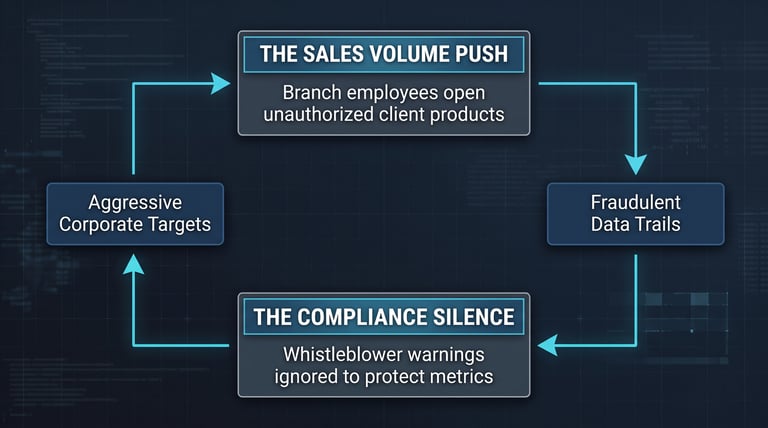
To hit their daily targets, branch employees began opening millions of unauthorized checking accounts, credit cards, and online banking profiles without customer knowledge or consent. This widespread fraud occurred because the company's internal performance measurement systems suffered from three fatal design flaws:
Over-Indexed Incentives: Management tracked a single lagging metric daily accounts opened per branch, while completely ignoring customer retention, satisfaction, and compliance metrics.
Aggressive Culture: Branch managers ran high-pressure daily review sessions, threatening to terminate employees who missed their sales targets. This hostile environment effectively forced staff to prioritize target wins over ethical conduct.
Silenced Risk Warnings: Because the fraudulent metrics reported high short-term growth and rising paper profits, internal compliance and risk controls were ignored by leadership to protect the illusion of a successful strategy.
The Systemic Fallout and Governance Lessons
The operational crisis broke when external regulators and journalists exposed the scale of the fraud. The systemic fallout was swift, illustrating how a misaligned metric can destroy a massive enterprise:
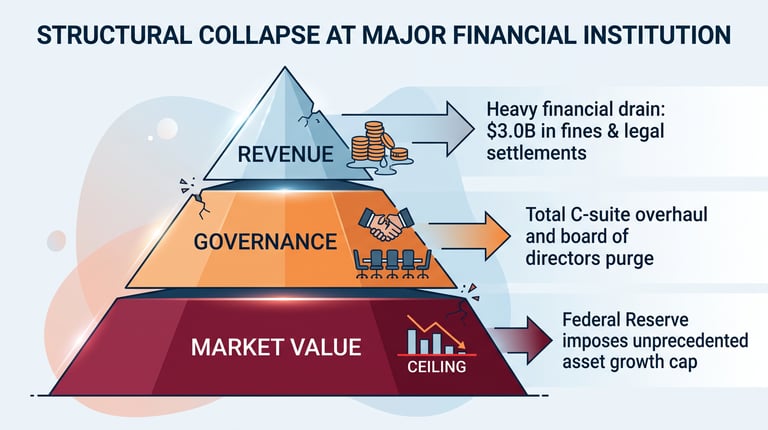
The long-term impact on Wells Fargo was severe. The bank paid over $3 billion in regulatory fines and legal settlements, faced a complete C-suite and board overhaul, and suffered immense damage to its brand reputation. Crucially, the Federal Reserve took the unprecedented step of placing an asset growth cap on the bank, preventing Wells Fargo from expanding its balance sheet for years.
For future executives, the lesson of Wells Fargo is clear: unbalanced metrics drive unbalanced behavior. Performance measurement dashboards must always balance volume targets with quality, risk, and compliance metrics to ensure short-term operational execution supports long-term corporate health.
Contact
Questions? Reach out anytime.
© 2025 BizSphere. All rights reserved.