
Navigating Team Faultlines and the Behavioral Design of Bias Free Corporate Promotion Pipelines
by Divya
4/17/20263 min read


Modern organizational behavior recognizes that maximizing the value of human capital requires balancing diversity against execution speed. For future executives, building teams is a complex exercise in social psychology. While differences in perspective drive corporate innovation, they also introduce structural friction that can slow down operational execution if left unmanaged.
Modern organizational behavior recognizes that maximizing the value of human capital requires balancing diversity against execution speed. For future executives, building teams is a complex exercise in social psychology. While differences in perspective drive corporate innovation, they also introduce structural friction that can slow down operational execution if left unmanaged.
1. The Cognitive Diversity Matrix: Balancing Innovation Against Friction
Firms frequently make the mistake of treating diversity as a uniform asset. In practice, organizational behavior frameworks distinguish between demographic traits and Cognitive Diversity differences in knowledge, experiences, and problem-solving approaches.
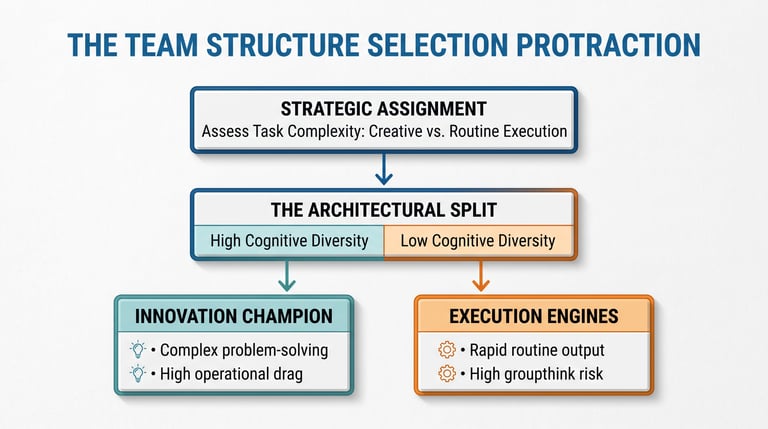
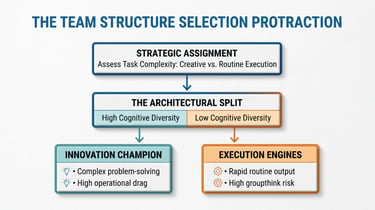
Managing these teams requires balancing two distinct psychological dynamics:
The Information-Processing Perspective (The Innovation Gain): Teams with high cognitive diversity possess a broader pool of knowledge and analytical approaches. This makes them significantly better at creative problem-solving, identifying market shifts, and designing complex corporate strategies.
Social Identity and Faultline Theories (The Friction Drag): High-diversity teams are vulnerable to the formation of internal fractions, or "faultlines." Employees naturally form sub-groups based on shared backgrounds, creating an "us versus them" dynamic that increases friction, slows communication, and can lead to operational gridlock.
Conversely, low-diversity teams often execute routine, standardized tasks faster because they share a common communication style. However, they are highly vulnerable to groupthink, frequently failing to spot disruptive external threats until it is too late.
2. The Performance Appraisal Penalty: Overcoming Subjectivity in Promotion Pipelines
The strategic value of a diverse workforce is frequently compromised during middle-management performance appraisals, where structural and implicit biases create artificial barriers in the promotion pipeline.
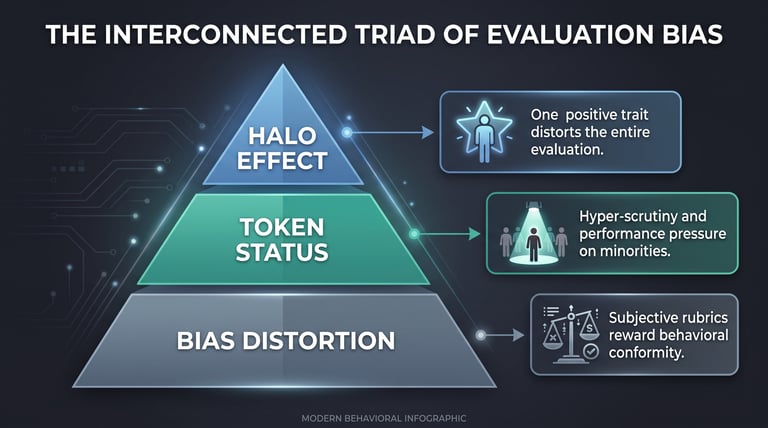
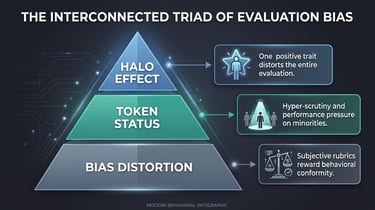
Three core behavioral forces drive these promotion barriers:
The Halo and Horns Effects: Appraisers allow a single prominent trait or recent event to distort their entire evaluation of an employee's multi-month performance, replacing objective analysis with impressionistic bias.
Tokenism Frameworks: Grounded in Rosabeth Moss Kanter’s research, when an individual holds "token" status within a leadership group, they face hyper-scrutiny. This high pressure can amplify minor mistakes while overshadowing their actual operational contributions.
Social Comparison Theory: Managers naturally favor and promote employees who mirror their own working styles, backgrounds, and communication habits. This dynamic subtly protects the existing corporate monoculture under the guise of assessing "cultural fit."
3. Behavioral Design: Auditing and Restructuring the Promotion Pipeline
To neutralize these behavioral traps and protect corporate talent, organizations must shift from vague, subjective appraisals to structured, data-driven selection systems:
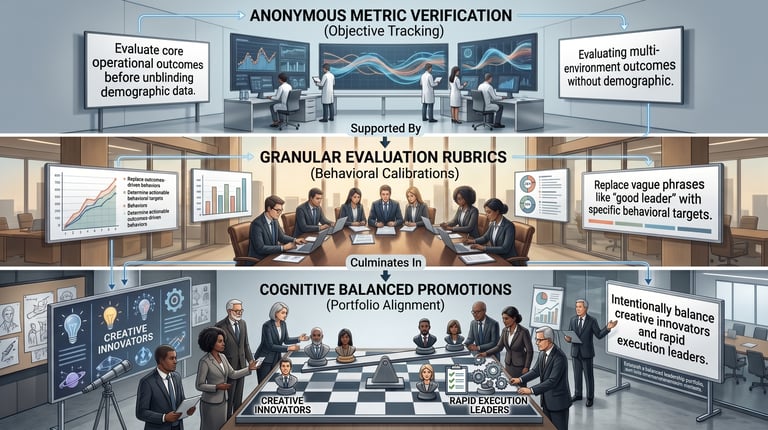
Deploy Blind Performance Reviews: Audit initial promotion pools by stripping out names, genders, and demographic data. Force evaluation committees to rank candidates strictly on verified business outputs, project outcomes, and KPI delivery metrics before unblinding the personal data.
Implement Granular, Actionable Rubrics: Eliminate vague, subjective review phrases like "strong cultural fit" or "displays natural leadership." Replace them with specific behavioral definitions and mandatory data points, forcing managers to back up every rating score with clear examples of documented work history.
Calibrate Team Portfolios Strategically: Match your team's diversity profile directly to the nature of the task. Assign low-diversity, high-speed execution teams to routine, time-sensitive operational tasks, while intentionally building highly diverse, cross-functional teams to lead your long-term research, innovation, and strategic pivot initiatives
Contact
Questions? Reach out anytime.
© 2025 BizSphere. All rights reserved.