
Overcoming Accountability Friction Reclaiming Control of Underperforming Project Groups
by Divya
6/4/20263 min read


Accountability friction within matrixed project groups is an exceptional threat to organizational velocity. When an cross-functional team or project cohort experiences underperformance, the typical response is structural escalation or reactive blame-shifting. Both options destroy team cohesion.
True project leadership hinges on diplomatic intervention, proactive boundary configuration, and objective triage. This master-level framework provides a step-by-step methodology to navigate asymmetric team dynamics, realign underperforming peers, and isolate risk without triggering institutional friction.
The Architecture of Accountability Friction
Accountability friction occurs when implicit performance expectations run up against ambiguous delivery structures. To solve this, a project manager must differentiate between functional capability gaps and behavioral engagement deficits.
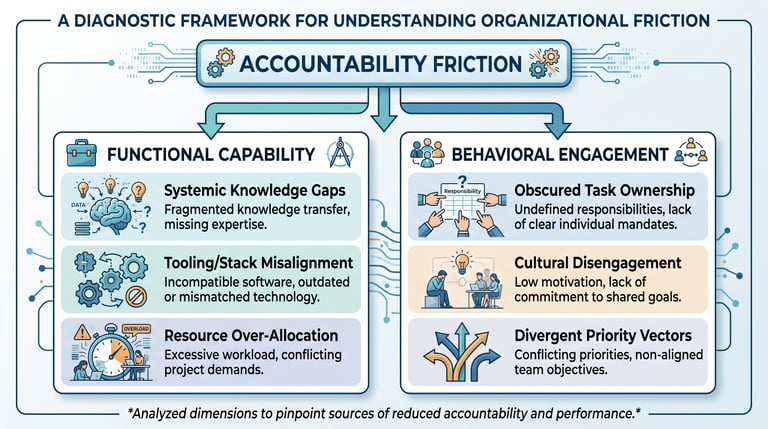
When execution slows, leaders often misdiagnose behavioral drag as a lack of skill, or vice versa. Realignment requires a strategic diagnostic process that isolates the operational root causes of a slipping timeline.
The Dynamic Intervention Matrix
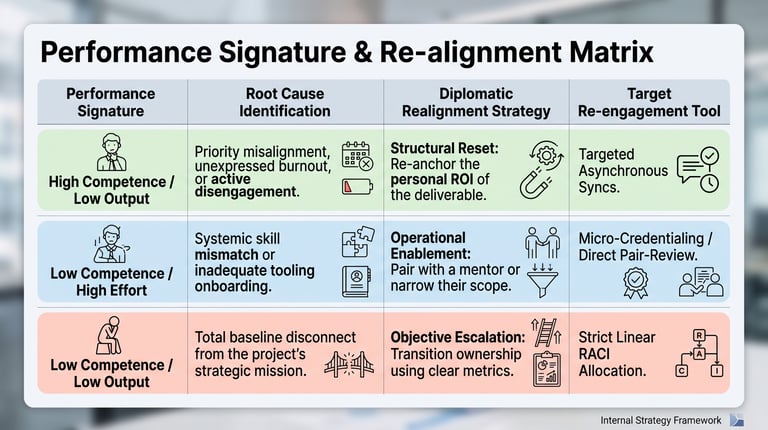
The baseline step in turning around an underperforming group is classifying the friction based on individual capacity and structural transparency.
The matrix below maps the exact diplomatic intervention paths required based on a worker's performance signature:
The 4-Step Structural Realignment Protocol
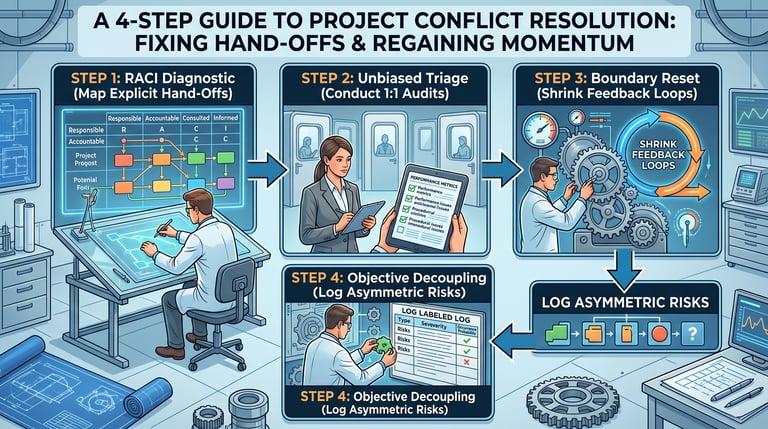
When a cross-functional project group begins missing key sprint milestones, execute this highly calibrated escalation loop immediately:
1. The Asynchronous RACI Diagnostic
Before hosting an emergency team sync, map the project's current task layout. Most accountability breakdowns stem from shared or ambiguous ownership. Eliminate any matrix task where multiple individuals are marked as "Responsible" (\(R\)). Ensure exactly one owner is explicitly accountable (\(A\)) per deliverable node.
2. The Unbiased Operational Triage
Conduct brief, isolated 1:1 check-ins with underperforming group components. Avoid accusatory framing like "Why is your team missing milestones?" Instead, frame the query around systemic friction:
"What structural blocker or dependency currently stands between your team and a green delivery status this week?"
This uncovers hidden bottlenecks, such as a downstream department withholding critical data assets, without causing defensive pushback.
3. The Structural Boundary Reset
When realigning a slipping cohort, shrink your operational feedback loops. If the group has been missing long-term bi-weekly milestones, transition the cadence to a strict, daily Micro-Milestone Matrix.
Break massive deliverables into micro-tasks with clear deadlines:
Phase 1 Baseline: The underperforming unit logs an explicit task update by 10:00 AM daily.
Phase 2 Review: Automated verification occurs at 4:00 PM via the central version control or project board.
4. The Objective Decoupling Protocol
If an individual or sub-team continuously fails to perform despite clear expectations, you must protect the broader delivery timeline. Document the variance using objective, quantitative data (e.g., missed deadlines, incomplete sprint points). Present this directly to their resource manager as a project risk log entry rather than a personal critique. This keeps your communication diplomatic while paving the way for strategic team re-allocation.
Implementing the Governance Grid
To permanently eliminate accountability friction across distributed teams, anchor your communication around a centralized Project Governance Grid.
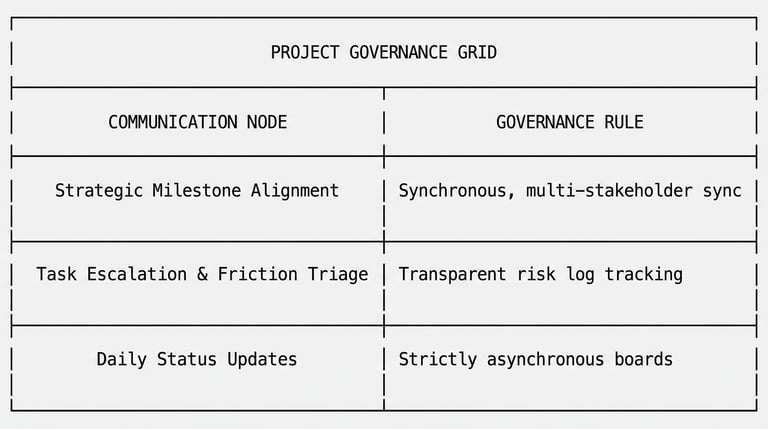
By decoupling daily progress tracking from lengthy synchronous alignment meetings, you reduce meeting fatigue. This allows the team to focus their energy entirely on clear execution, data verification, and cross-functional alignment.
Contact
Questions? Reach out anytime.
© 2025 BizSphere. All rights reserved.