
Overcoming the Fear of Self-Promotion in Coffee Chats
by Divya
6/12/20264 min read


For many international students, the American concept of networking and coffee chats feels inherently deeply uncomfortable. If you were raised in a culture that values collective achievement, humility, and deference to authority, talking openly about your accomplishments can feel boastful, transactional, or downright rude.
Yet, in the US job market, informational interviews are not optional they are the primary mechanism for securing corporate referrals and landing interviews.
To succeed, you do not need to alter your core values or become an aggressive self-promoter. Instead, you need a mental and behavioral pivot. By reframing the coffee chat from a transactional pitch into an intellectual, relationship-building exercise, you can project authentic confidence while remaining culturally grounded.
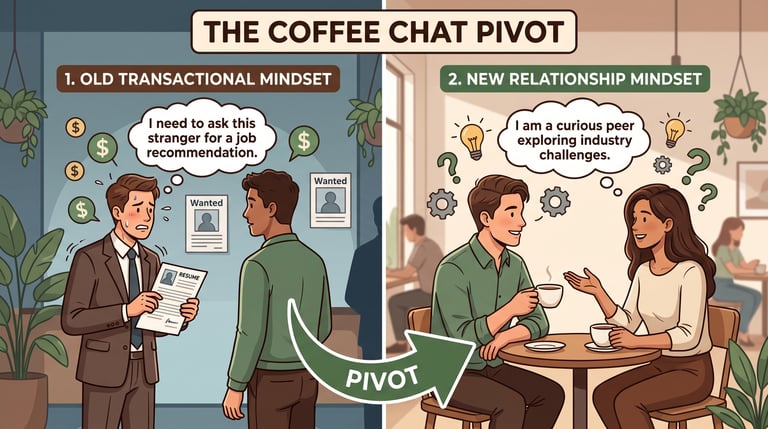
The Mindset Shift: Curiosity Over Solicitation
The root of networking anxiety for international students is the fear of being perceived as transactional using someone just to get a job. This fear evaporates when you realize that high-performing US professionals do not actually want you to ask them for a job during a coffee chat. In fact, doing so is considered bad etiquette.
Reframe the objective: Shift your goal from "asking for a referral" to "seeking professional perspective."
Embrace the peer dynamic: An informational interview is an exchange of ideas. While they bring local industry expertise, you bring fresh academic insights, cross-border observations, or technical frameworks.
The flattery of advice: In Western culture, asking someone for their professional advice is an act of deep respect, not an imposition. People enjoy sharing their journeys and mentoring rising talent.
Cultural Translation: Sounding Confident but Humble
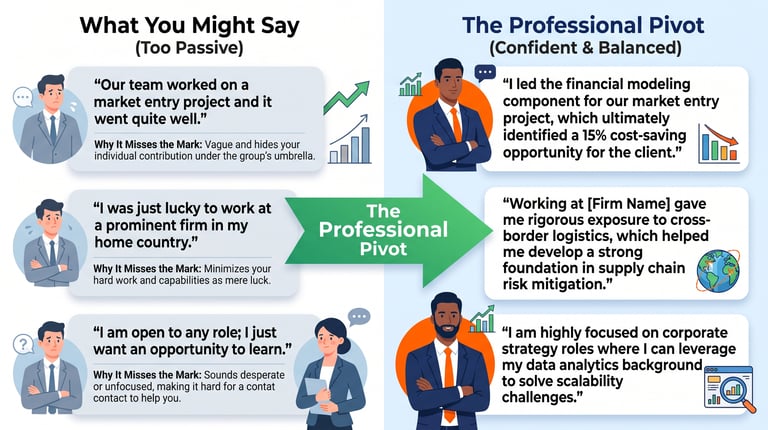
In many global cultures, using the word "I" excessively sounds arrogant; students are taught to say "We did X" or "My team accomplished Y." In a US interview or coffee chat, however, using "We" too much signals to an American professional that you were a passive observer rather than a driver of results.
You can successfully bridge this gap by anchoring your personal achievements to objective data, letting the facts do the talking for you.
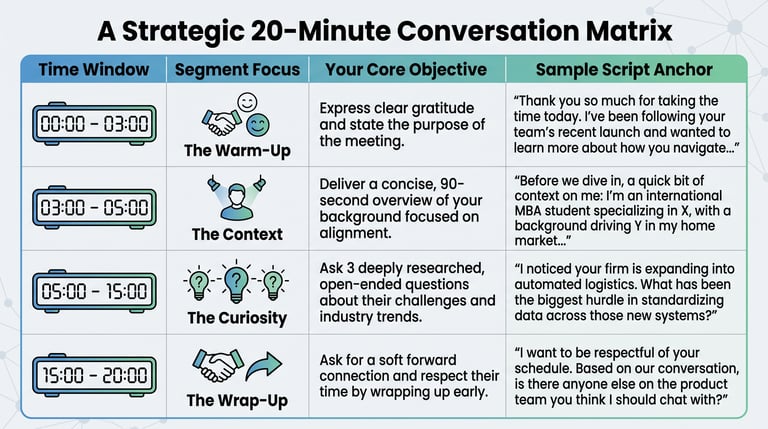
The Anatomy of a Perfect 20-Minute Coffee Chat
To keep a coffee chat from feeling awkward, you must take structural ownership of the conversation. Because you requested the meeting, the professional expects you to guide the agenda.
Advanced Curiosity Scripts that Build Value
The most effective way to impress a US professional without boasting about yourself is by asking intelligent, high-level questions. A sophisticated question subtly signals your business acumen, domain expertise, and preparation without you ever having to explicitly state how smart you are.
When Exploring Company Culture, avoid generic questions like "Is it nice to work there?" Instead, focus on operational realities:
"How does your team typically handle strategic alignment when corporate priorities pivot rapidly mid-quarter?"
"What differentiates a professional who simply hits their metrics from someone who truly excels within your group’s culture?"
When Discussing Industry Trends, demonstrate that you are actively reading the news and thinking like a future manager:
"I was reading about the new regulatory changes impacting trade compliance. How is your team adapting its supply chain forecasting models to mitigate that risk?"
"With the industry shifting toward decentralized data platforms, what skills do you think the next generation of analysts will need to stay competitive?"
The Follow-Up: Converting Conversations into Relationships
A coffee chat should never be a one-off transaction. In the US, relationships are maintained through consistent, low-friction touchpoints over time.
The 24-Hour Thank You: Send a concise note within 24 hours. Do not just say "Thank you for your time." Mention one specific insight they shared that genuinely impacted your thinking. This proves you were actively listening.
The "Loop-Back" Strategy: If they recommended a book, an article, a framework, or a contact, actually follow through on it. Two weeks later, send a brief update: "I read the article you suggested regarding market segmentation. Your point about consumer behavioral shifts was incredibly helpful, and I actually applied that logic to a case study in my strategy class this week. Thank you again for the direction."
Keep Them Updated: When you land an internship or a full-time role, send a short note to everyone who granted you a coffee chat along the way. Professionals love to see the positive trajectory of students they advised, cementing a connection that lasts long after your job hunt is over.
Networking in the US is ultimately a conversation between two peers who share a passion for an industry. By shifting your focus from self-promotion to deep professional curiosity, you eliminate the discomfort of bragging and replace it with the compelling value of an engaged, global mind.
Contact
Questions? Reach out anytime.
© 2025 BizSphere. All rights reserved.