
Strategic Continuity and the Power of the Insider in Fortune 500 Succession Planning
by Divya
4/24/20262 min read


The simultaneous leadership transitions at Apple and Best Buy offer a masterclass in strategic corporate governance, highlighting how the world's largest enterprises mitigate operational disruption and preserve institutional knowledge. In an era where activist investors routinely push for disruptive external turnarounds, both the technology and retail sectors are actively signaling a preference for platform stability by finalizing highly structured, long-term succession roadmaps. By elevating deeply embedded internal executives to the chief executive role, these corporate boards are treating succession planning not merely as an emergency contingency, but as a core vehicle for maintaining capital market confidence. From a strategic management perspective, this deliberate reliance on internal promotion validates the Resource-Based View (RBV) framework, which asserts that a firm's most valuable, inimitable, and rare capabilities are often cultivated organically over decades within its own corporate culture.
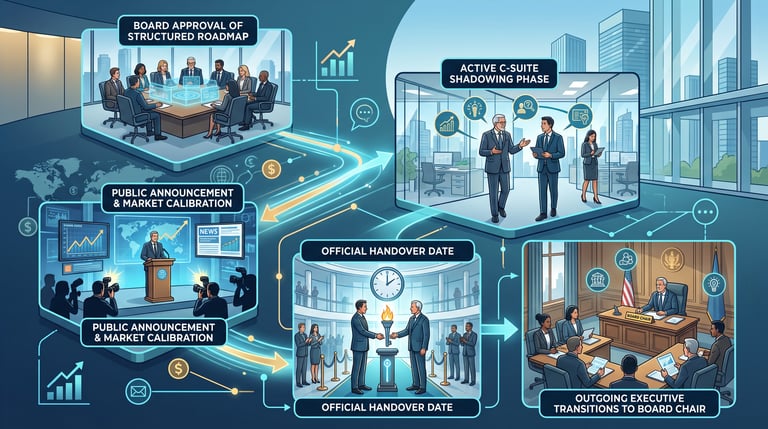
This formalized pipeline minimizes asymmetric information risks that typically spook institutional investors during a changing of the guard. At Apple, this mechanism is perfectly exemplified by John Ternus, the current Senior Vice President of Hardware Engineering, who will officially step into the Chief Executive Officer role on September 1, 2026. By having Tim Cook transition to Executive Chairman of the board, Apple leverages a classic "insider" handover model designed to maintain platform continuity, reassure supply chain partners, and sustain premium hardware ecosystem valuations without missing an operational beat.
Simultaneously, Best Buy is deploying an identical defensive governance strategy by announcing that Jason Bonfig will become the firm’s new CEO on October 31, 2026, succeeding Corie Barry. Bonfig’s profile as a 25-year veteran who currently serves as Chief Customer, Product, and Fulfillment Officer underscores a highly deliberate pivot toward deep-domain operational expertise. Applying Porter’s Value Chain analysis, Best Buy recognizes that its primary competitive advantages lie in inbound and outbound logistics, coupled with superior customer service touchpoints. Promoting a leader who fundamentally engineered the firm’s modern omni-channel fulfillment architecture is a direct response to intensifying margin pressures from e-commerce giants. Ultimately, both transitions demonstrate that long-term strategic resilience depends entirely on a board's ability to seamlessly pass the torch without upending the underlying engine of corporate execution.
Contact
Questions? Reach out anytime.
© 2025 BizSphere. All rights reserved.