
The Gen Z Sustainability Paradox: Dissecting the Unit Economics and Ethics of Fast Fashion
by Divya
5/15/20263 min read


In MBA competitive strategy and operations coursework, the fast fashion business model is often studied as a masterclass in supply chain agility. By minimizing the time from design concept to retail floor, pioneering brands like Zara and H&M historically reengineered traditional apparel cycles. Today, "ultrafast fashion" disruptors like Shein have accelerated this process even further, utilizing real-time data analytics and highly fragmented manufacturing networks to bring thousands of new styles to market daily. However, this hyper-velocity operational model hides a deep structural crisis: it relies entirely on a culture of overproduction and disposable consumer habits.
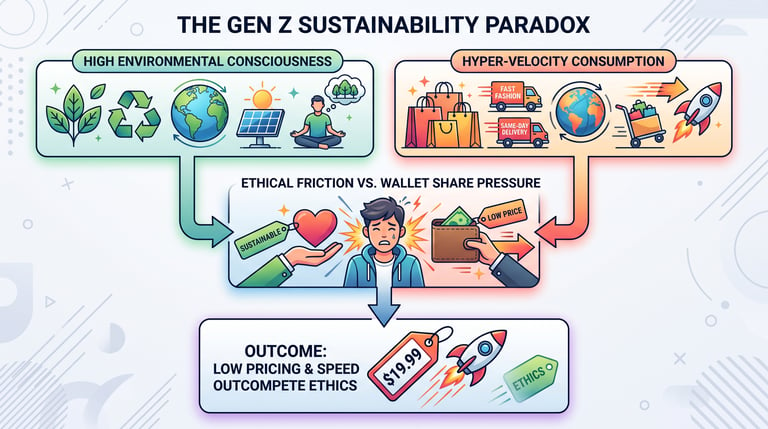
For future business leaders, the most fascinating dimension of this industry is the Gen Z Sustainability Paradox. Academic surveys consistently show that Gen Z is the most environmentally conscious consumer demographic in history, frequently demanding corporate transparency and circular economies. Yet, market data shows they remain the primary drivers of ultrafast fashion growth. This disconnect reveals a sharp friction point between abstract consumer ethics and concrete wallet share. When a low-income student is forced to choose between a $150 sustainably manufactured garment and a $15 trending outfit on an app, the immediate affordability and digital dopamine loop of fast fashion usually win out over long-term environmental concerns.
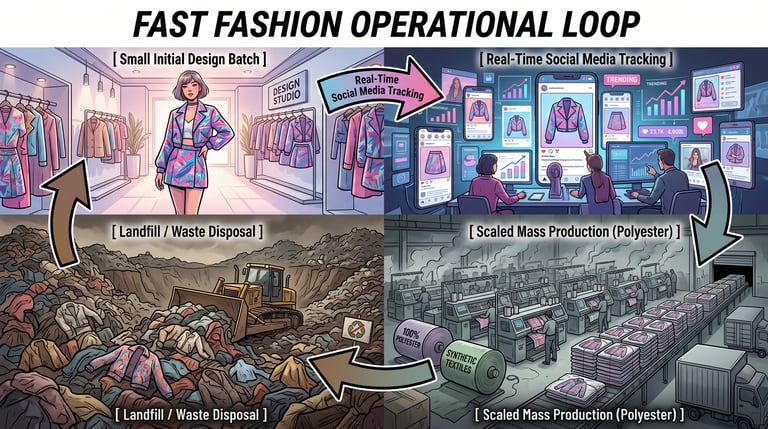
This pricing advantage is driven by an operational framework that pushes massive environmental externalities onto the global commons. The traditional garment industry works on rigid, seasonal demand forecasts, which frequently leaves billions of unsold clothes rotting in landfills or incinerated to protect brand equity. Fast fashion attempts to mitigate this by printing ultra-small initial batches and scaling production up only when an item goes viral online. However, because the structural cost of manufacturing these items is kept artificially low through cheap synthetic fibers like polyester and outsourced labor with weak oversight, the industry still overproduces on a massive scale. The financial penalties for holding excess, unpurchased inventory are simply treated as a minor cost of doing business.
Can this business model genuinely "kick its dirty habits" through voluntary corporate social responsibility (CSR) initiatives? From a strategic standpoint, the answer is highly doubtful. True sustainability requires slowing down supply chains, investing in biodegradable textiles, and paying living wages actions that directly destroy the low-cost, high-volume pillars that fast fashion is built upon. While many brands heavily market "conscious collections" or textile recycling drop-boxes, these efforts often amount to greenwashing. They do not alter the core financial incentive to maximize quarterly clothing volume sales.
Ultimately, solving the fast fashion crisis will likely require regulatory intervention rather than relying on consumer ethics or corporate goodwill. As supply chain disclosure laws tighten globally, future executives must prepare for a landscape where carbon emissions, water pollution, and extended producer responsibility (EPR) are priced directly into a company's financial statements. For MBA students tracking the future of retail, the lesson is clear: an operational model that relies on resource depletion and environmental externalities is not a sustainable strategy, it is a significant regulatory and reputational liability waiting to be disrupted.
Contact
Questions? Reach out anytime.
© 2025 BizSphere. All rights reserved.