
Building Sustainable Business Models for Profit
by Divya
6/30/20263 min read


Modern corporate strategy has evolved beyond viewing environmental, social, and governance (ESG) metrics as simple regulatory compliance checklists. For MBA graduates and executive leaders, sustainability is now a core driver of competitive advantage and long-term profitability. Traditional business models often treated environmental impact as an externality to be mitigated after production, which consistently eroded profit margins and strained investor relations. By contrast, a truly sustainable business model embeds resource efficiency, circular life cycles, and stakeholder equity directly into the initial product architecture, turning regulatory hurdles into cost-saving innovations.
To transition from legacy operations to a profitable sustainable model, organizations typically restructure their value chain into a closed-loop system.
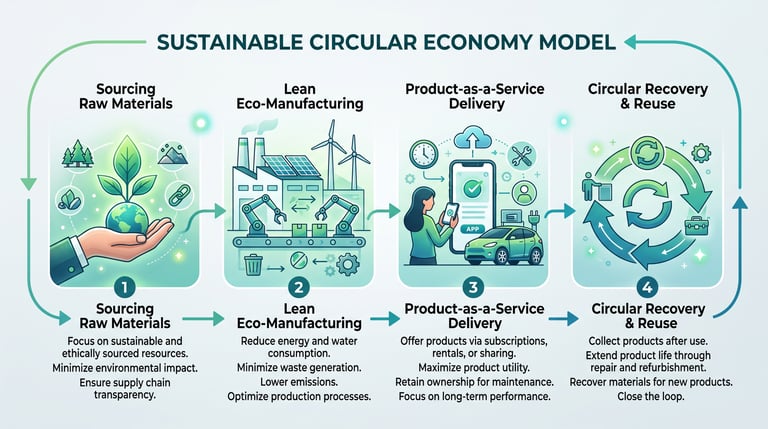
First, procurement teams secure responsibly sourced, renewable inputs that insulate the supply chain from future carbon taxes and resource scarcity. Second, manufacturing centers implement energy-efficient protocols to minimize immediate operational waste and lowering utility overhead. Third, instead of selling products via traditional one-off transactions, companies increasingly adopt a product-as-a-service (PaaS) framework to retain ownership of the asset and generate recurring subscription revenue. Finally, at the end of the product lifecycle, the company recovers the materials to refurbish or recycle them, significantly reducing the raw material costs for the next production cycle.
When evaluating how to monetize these sustainable initiatives, corporate strategy teams generally deploy one of three primary structural frameworks depending on their industry assets.
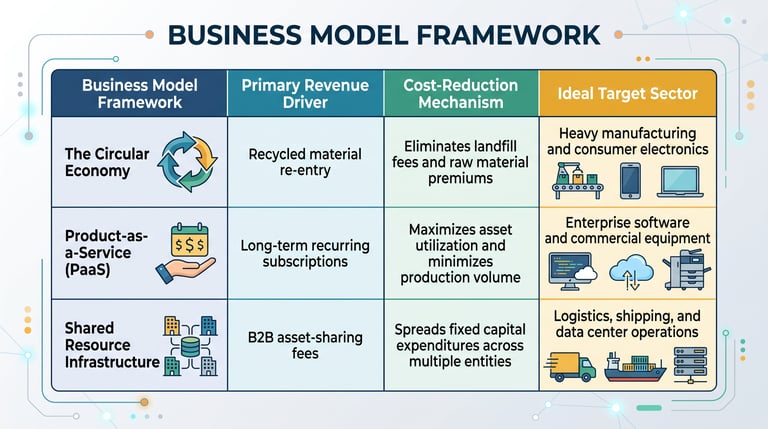
While these frameworks offer a clear path to market differentiation, executives must carefully manage the initial capital expenditure spike required to overhaul legacy supply chains. Green premiums on raw materials can temporarily depress margins if the transition is managed poorly, which can trigger immediate pushback from short-term institutional investors. To counter this, financial officers must use transparent accounting frameworks that explicitly connect carbon reductions to long-term risk mitigation, such as lower insurance premiums and cheaper capital access through green bonds. Organizations that successfully bridge this gap prove that sustainability is not a cost center, but an effective mechanism for driving enterprise value and market resilience.
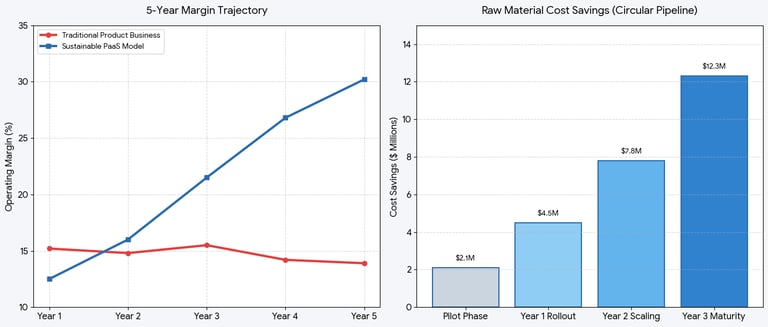
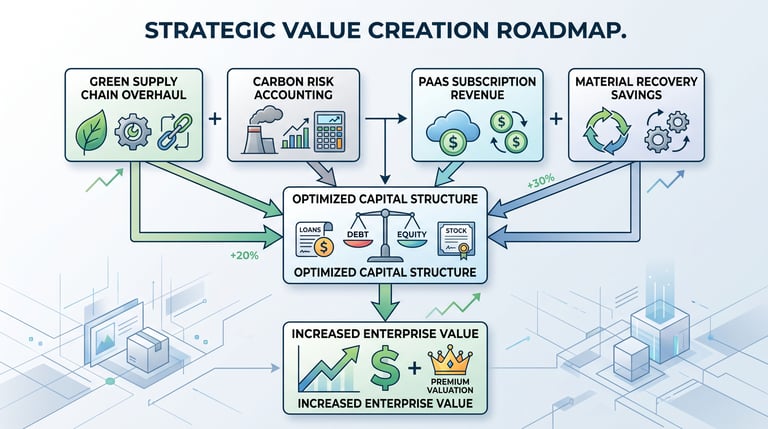
By unifying sustainable operational metrics with core financial reporting, executive teams can confidently pivot away from defensive risk management toward proactive value creation. When a company links its material recovery savings and recurring service revenues directly to its capital structure, it creates a self-funding loop where eco-efficiency drives higher investor returns. This integrated financial approach ensures that the business remains highly attractive to both impact investors and traditional asset managers. Ultimately, embedding sustainability into the corporate DNA ensures that a company protects the planet while building a highly resilient, profitable, and future-proof enterprise.
Contact
Questions? Reach out anytime.
© 2025 BizSphere. All rights reserved.