
Impact Of US Tariff Threats Against French Wine On Global Market Strategy
by Divya
6/15/20262 min read


The delicate balance of global trade strategy faces a critical case study as the United States administration threatens a 100 percent tariff on French wine imports, providing MBA students with a textbook example of asymmetric trade retaliation. This aggressive countermeasure directly responds to France's proposed digital services tax, which Washington argues unfairly targets American technology giants like Google, Apple, Facebook, and Amazon. The escalating dispute highlights a growing operational friction between traditional tangible trade commodities and the rapidly expanding global digital economy, forcing multinational corporations to reassess their cross-border supply chains and risk management frameworks.
From a corporate strategy perspective, France intends to implement the digital services tax to address a perceived systemic loophole, ensuring that massive tech firms pay taxes in the jurisdictions where they physically generate digital revenue rather than where they headquarter their intellectual property. Washington views this policy as a discriminatory trade barrier specifically designed to penalize American corporate dominance. By weaponizing agricultural import duties, the United States is leveraging a highly lucrative European export sector to apply political pressure, demonstrating how modern macroeconomics allows unrelated industries to become collateral damage in geopolitical standoffs.
For global supply chain managers, a 100 percent tariff would effectively double the landed cost of French wine for United States distributors, creating immediate cash flow stress and capital constraints across the hospitality and retail sectors. Importers face sudden, massive working capital requirements to clear existing shipments through customs, while consumer price elasticity models suggest a sharp drop in demand as favorite vintages skyrocket in price. French vineyards, which heavily rely on the lucrative American market for premium product margins, risk severe revenue shocks, illustrating the dangers of high geographical concentration in an export portfolio.
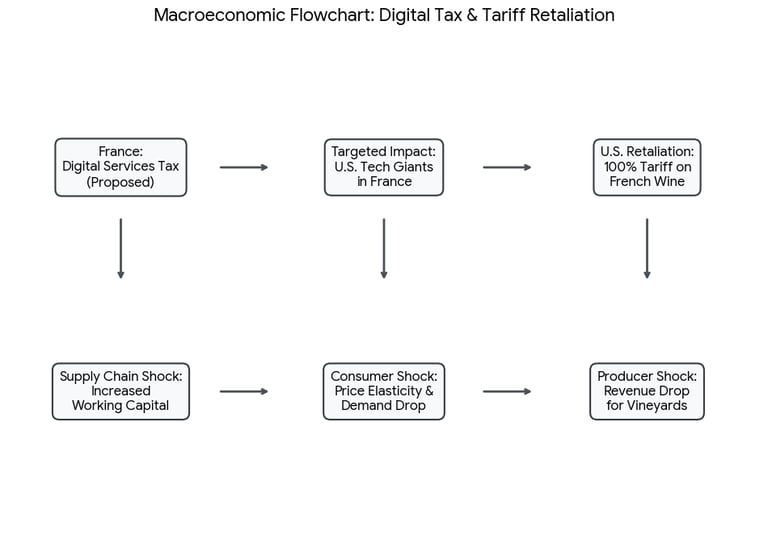
This high-stakes dispute introduces widespread market uncertainty and destabilizes already fragile international trade frameworks like the World Trade Organization. Unpredictable trade policies disrupt long-term corporate capital expenditure planning for independent logistics providers, multinational hospitality groups, and international distributors who bear the immediate financial brunt of the political standoff. Furthermore, game theory models suggest a high probability of a tit-for-tat escalation, potentially provoking the European Union to retaliate with matching tariffs on American exports, creating a broader trade war that complicates international business strategy for years to come.
Explore More Business Articles
Contact
Questions? Reach out anytime.
© 2025 BizSphere. All rights reserved.