
Master the Case Method 5 Steps to Ace Classroom Discussions
by Divya
6/2/20263 min read


The case method remains the definitive pedagogical framework for elite executive training and corporate leadership preparation. Unlike traditional passive learning models, the case method forces you to step directly into the shoes of a corporate protagonist facing an ambiguous crisis with messy data, conflicting internal priorities, and tight deadlines.
To excel in this highly competitive environment, you cannot simply read the text and summarize the facts. You need an aggressive, systematic framework to isolate core strategic dilemmas and deliver high-impact contributions during live classroom debates.
The Anatomy of an Executive Case Study
Business case studies are intentionally engineered to overwhelm you. They mimic corporate reality by burying vital information in a mountain of irrelevant operational noise, non-linear timelines, and complex financial charts.
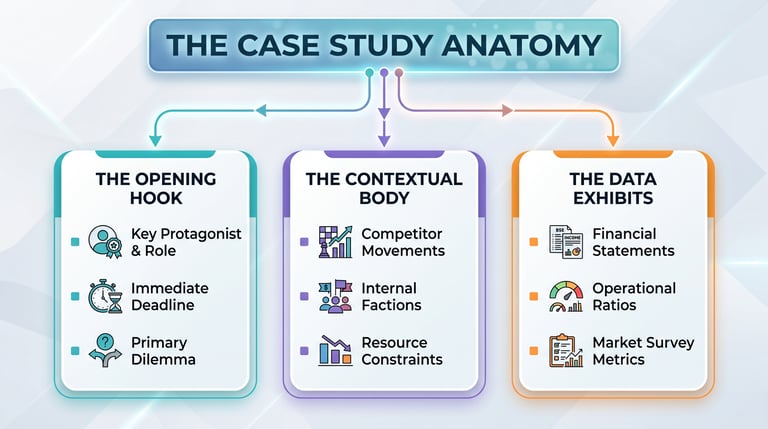
The key to efficiency is understanding that the answer is almost never found strictly within the text. True insight lives at the intersection of the historical narrative and the quantitative data exhibits at the back of the file.
The 5-Step System for Case Mastery
This disciplined prep protocol optimizes your analytical clarity while halving your raw preparation time.
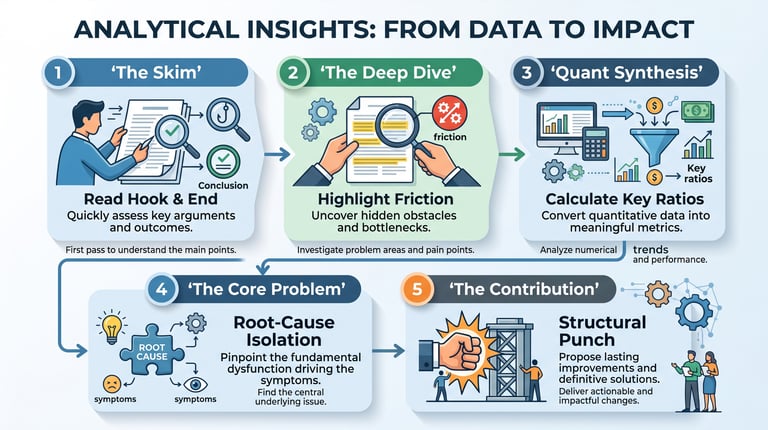

Step 1: The Structural Skim (Time Allocation: 5 Minutes)
Never read a business case sequentially from page one on your first pass.
The Hook: Read the first two paragraphs to identify the decision-maker, company lifecycle, and organizational stakes.
The Conclusion: Jump directly to the end. Authors usually reveal the explicit options currently on the table in the final paragraphs.
The Appendix: Scan the titles of the exhibits to identify which analytical frameworks (e.g., balance sheets, production capacity logs) will be necessary.
Step 2: The Contextual Deep Dive (Time Allocation: 20 Minutes)
Read the text chronologically with a selective highlighter. Ignore standard history and descriptive filler. Instead, hunt exclusively for organizational asymmetries: internal operational roadblocks, budget constraints, political infighting, and unverified leadership assumptions.
Step 3: Quantitative Synthesis (Time Allocation: 15 Minutes)
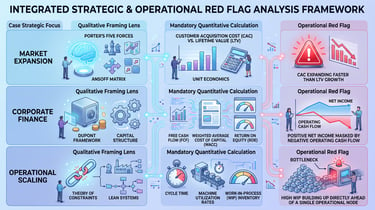
A master-level student cross-references the text with the numbers immediately. If a case narrative notes that a product line is struggling, you must quantify that struggle before entering the classroom.
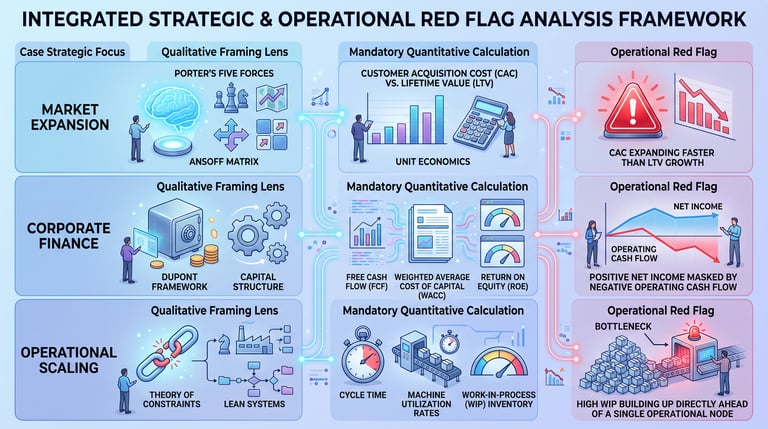
The table below highlights the foundational financial and operational metrics to compute based on the nature of the business challenge:
Step 4: Root-Cause Isolation (Time Allocation: 10 Minutes)
Distill your research into a single, cohesive problem statement. Do not confuse symptoms with root causes. A dropping market share is a symptom; an outdated production facility or a flawed incentive structure is the root cause. Apply the "So-What?" Test. If you pitch a problem statement and a peer can ask "So what?", you are still looking at a symptom. Keep digging until you reveal the core structural tension.
Step 5: Structuring the High-Impact Contribution
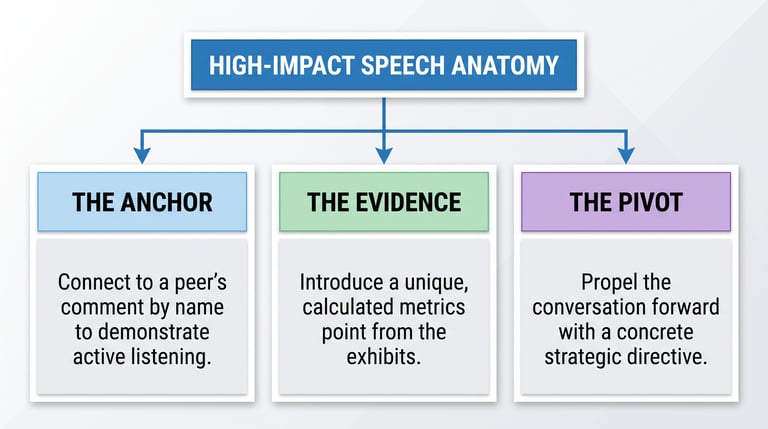
Classroom airtime is an incredibly scarce commodity. When the professor calls on you, you have roughly 60 seconds to deliver your point. Never spend that time recapping case facts that everyone has already read. Use a three-tier delivery structure:
Executing Under Pressure
Elite professors map their boards carefully, separating ideas into columns like Problem Context, Data Diagnostics, Action Alternatives, and Risk Mitigations.
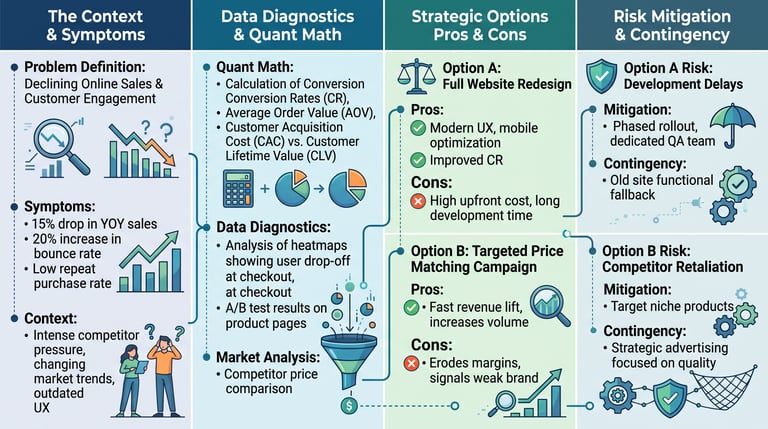
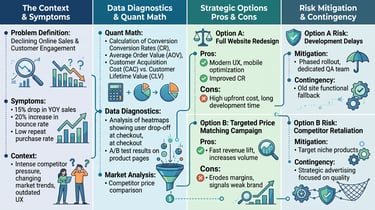
Track where the chalk hits the board. If the professor is actively charting quantitative math in Column 2, do not raise your hand to offer a broad, philosophical idea about corporate culture for Column 4. Sync your hand-raises with the active analytical quadrant of the room to maximize your strategic value.
By shifting from passive reading to active, data-driven diagnostics, you insulate yourself from cold calls, command the respect of your peers, and build the precise executive presence required to lead modern enterprise teams.
Contact
Questions? Reach out anytime.
© 2025 BizSphere. All rights reserved.