
Mental Health in Grad School: Easy Self-Care Habits to Help You Stay Happy and Healthy
by Divya
5/29/20265 min read
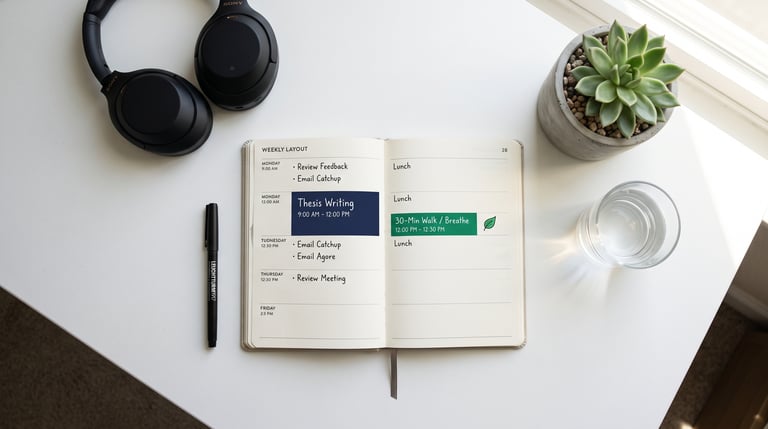

Pursuing a graduate degree is an incredible milestone. However, the path to an advanced degree is often paved with intense pressure, heavy workloads, and a high level of academic stress. In the fast-paced environment of graduate school, it is easy to fall into the trap of prioritizing your research, assignments, and professional networking over your fundamental human needs.
Many graduate students view mental health and self-care as luxuries they will get around to after graduation. This approach is highly counterproductive. Your mind is your primary asset in graduate school. If you do not protect your psychological well-being, your cognitive performance, academic writing quality, and physical health will eventually suffer.
True self-care is not about expensive lifestyle trends or disrupting your entire schedule. It is about building small, sustainable, daily habits that protect your peace of mind and help you perform at your best. This comprehensive guide breaks down the invisible challenges of advanced study and provides a practical blueprint for staying healthy.
The Invisible Challenges of Graduate Education
Graduate school introduces a unique set of psychological stressors that differ significantly from undergraduate life. Understanding these invisible challenges is the first step toward managing them effectively.
The Imposter Syndrome Trap - Imposter syndrome is the constant fear of being exposed as an academic fraud. When you are surrounded by brilliant peers, top professors, and complex research papers, it is easy to assume that your admission to the program was a mistake. This mindset leads to overworking, constant anxiety, and a total lack of confidence in your ideas.
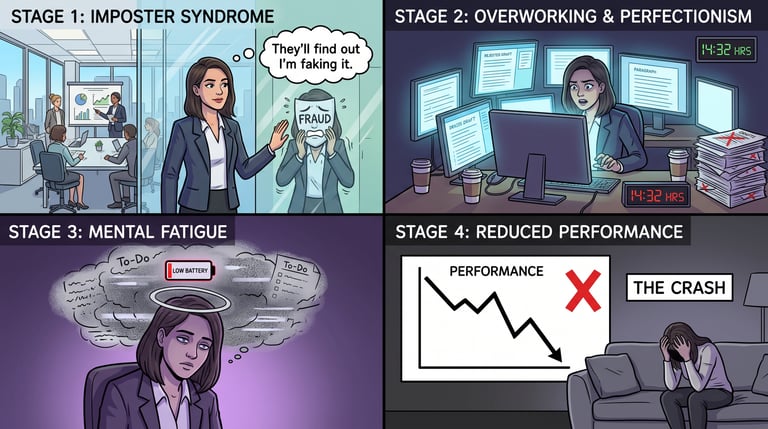
The Isolation Factor - Unlike undergraduate programs, which feature large classes and highly structured social activities, graduate school can be an isolating experience. Spending long hours alone analyzing data, writing a thesis, or studying for exams can cut you off from your support systems, leaving you feeling disconnected from the outside world.
The Illusion of Constant Availability - Because academic research and writing never truly have a definitive endpoint, graduate students often feel like they should be working every waking hour. This guilt makes it difficult to relax, leading to chronic stress that keeps your nervous system on high alert.
High-Yield Emotional and Mental Boundaries
To protect your mental health, you must build strong boundaries around your time and attention. These rules help protect your mind from constant academic pressure.
1. Define Your "Off-the-Clock" Hours
Establish a clear, daily boundary where your academic responsibilities end and your personal life begins.
Choose a realistic time every evening (for example, 7:00 PM) to close your research tabs and stop checking university emails.
Avoid the temptation to do "just one more quick edit" on a paper late at night.
Give your brain at least two full hours of complete disconnection before bed to ensure you get deep, restorative sleep.
2. Implement the "No-Compare" Rule
Your graduate school experience is entirely your own. Comparing your publication record, grades, or project pace to your classmates is a guaranteed way to fuel anxiety. Focus on your individual growth, your master schedule, and your unique research goals rather than trying to match the timeline of your peers.
3. Normalize the "Good Enough" Draft
Perfectionism is a major driver of depression and procrastination in graduate programs. Waiting for a perfect wave of inspiration before you start writing often leads to missed deadlines and high stress.
Instead, give yourself permission to write a messy, average first draft. It is much easier to edit an imperfect document than it is to stare at a blank screen trying to generate a masterpiece on the first try.
The Daily Self-Care Framework
Maintaining your health does not require hours of free time. Use this simple, structured approach to fit self-care habits into your busiest days.
The Morning Check-In - Before opening your laptop or checking your email inbox, take five minutes to ground yourself.
Take three deep breaths and check in with your physical body. Are you holding tension in your jaw or shoulders?
Write down one small, non-academic thing you are looking forward to today, such as a hot cup of tea or a walk outside.
Set a positive intention for how you want to manage your stress levels throughout the day.
The Midday Brain Break - Working for hours without a break drains your energy and lowers your focus. Every 90 minutes, step away from your workspace for a brief five-minute intermission.
Stand up, stretch your body, and look away from all digital screens to rest your eyes.
Walk to a window to get a dose of natural sunlight, or step outside for a quick breath of fresh air.
Drink a full glass of water to stay hydrated, as mild dehydration can mimic feelings of anxiety and fatigue.
The Evening Transition
Tidy Your Desk: Clear your workspace, close your open books, and pack away your laptop to remove work from your sight.
Shift Your Mindset: Listen to an upbeat playlist, an audiobook, or a podcast during your trip home to help change your focus.
Clear Your Head: Spend 10 minutes writing out tomorrow's to-do list so those tasks do not keep running through your mind while you try to sleep.
Building a Community Support Network
You do not have to navigate the graduate school journey completely on your own. Building a strong support network is essential for protecting your mental well-being over the long haul.
Form Peer Venting Alliances - Connect with a few trusted classmates to create a safe space where you can share your struggles honestly. Knowing that your peers are facing the exact same doubts and workloads instantly weakens imposter syndrome and helps reduce feelings of academic isolation.
Keep a "Non-Academic" Social Circle - Maintain friendships with people who are completely outside your university bubble. Spending time with friends who do not know or care about your specific research topic helps keep your life in perspective, reminding you that your identity is far larger than just your graduate student status.
Use Campus Mental Health Resources - Most universities offer dedicated counseling centers, stress management workshops, and mental health support groups specifically for graduate students. Seeking professional support is not a sign of weakness; it is a smart, proactive strategy to protect your long-term success and well-being.
Actionable Graduate Self-Care Checklist
Use this checklist each week to evaluate your mental health habits and make adjustments before stress turns into burnout:
Take at least one full day off from studying or research each week to allow your mind to fully recover.
Get at least 7 hours of sleep for four consecutive nights to protect your cognitive function.
Spend 20 minutes outside in nature or a local park twice a week to lower your cortisol levels.
Move your body for 15 minutes daily, whether through a walk, yoga, or a quick workout.
Declutter your main study area once a week to create a calm, organized space for your mind.
Say no to a non-essential academic task or event that would overextend your schedule.
Reach out to a friend or family member outside of school for a casual, non-academic catch-up conversation.
Explore More Business Articles
Contact
Questions? Reach out anytime.
© 2025 BizSphere. All rights reserved.