
The Multicloud AI Era Begins with OpenAIs Great Escape
by Divya
4/27/20262 min read


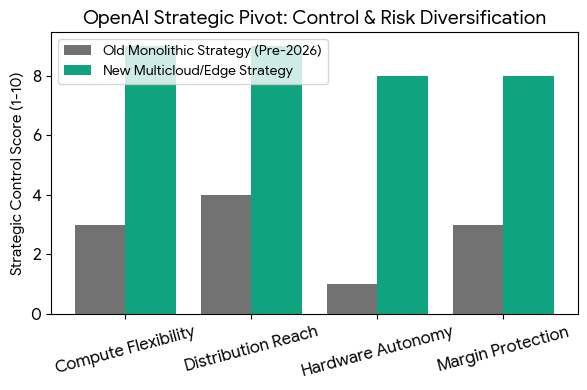
The corporate divorce of the decade just dropped, and it carries a textbook lesson in platform risk for every future executive. By severing its strict cloud exclusivity with Microsoft and simultanously jumping into the hardware sandbox with Qualcomm, OpenAI just staged a masterclass in strategic repositioning. For years, critics argued that OpenAI was essentially a subsidiary of Redmond, locked into Azure's infrastructure. By opening its doors to Amazon Web Services (AWS) and Google Cloud, Sam Altman has successfully commoditized the cloud layer, forcing the tech giants to compete for OpenAI's workloads rather than dictating its future.


The secondary shockwave—OpenAI's reported venture into custom smartphone processors with Qualcomm and MediaTek—reveals their ultimate end game: vertical integration at the edge. Software-only AI businesses are highly vulnerable to hardware gatekeepers. By building specialized silicon targeted for a 2028 device rollout, OpenAI is skating to where the puck is going, aiming to bypass standard app stores entirely. They want to control the physical portal through which consumers interact with ambient AI agents, challenging Apple's hardware hegemony right at the chip level.
For MBA students mapping out the future of tech strategy, the takeaway is clear: infrastructure is a commodity, but distribution and edge hardware control the value chain. OpenAI realized that being the world's best software model is meaningless if you are bottlenecked by one cloud provider's servers or throttled by another company's mobile operating system. This double-play marks the definitive end of the early AI land-grab era and ushers in a brutal, multi-front war for platform dominance where agility beats exclusive alignment every single time.
Contact
Questions? Reach out anytime.
© 2025 BizSphere. All rights reserved.