
The Strait of Hormuz Standoff - Why Rising Energy Risk Demands a Realtime Overhaul of Corporate Supply Chains
by Divya
4/20/20263 min read


The sudden 6% weekend spike in crude oil prices, which pushed Brent crude past $95 per barrel, is a stark reminder that geopolitical instability remains the ultimate disruptor of corporate financial planning. Triggered by a collapsing Middle East truce and the high-stakes U.S. seizure of an Iranian cargo ship near the critical Strait of Hormuz choke point, this price surge proves that standard supply chain strategies are no longer sufficient. For modern executive boards, navigating this volatility requires moving past passive cost-tracking to build active, real-time risk mitigation systems.
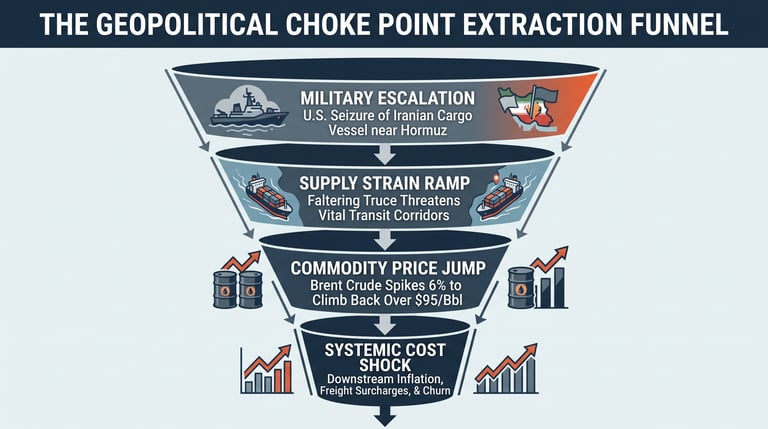
For years, multinational corporations optimized their logistics networks using the "just-in-time" model, prioritizing minimal inventory holding costs above all else. However, when geopolitical choke points like the Strait of Hormuz enter high-friction zones, these thin supply chains quickly break down.


A sudden energy price shock impacts more than just fuel costs; it creates a cascade of financial challenges across the entire value chain. Rising oil prices quickly translate into higher ocean freight surcharges, increased manufacturing utilities, and rising chemical input costs.
Firms that operate with thin inventory buffers face a difficult choice: absorb these unexpected margin hits and face lower quarterly earnings, or pass the costs down to consumers and risk losing market share to localized competitors.
To insulate a corporation from sudden energy spikes, chief financial officers must treat geopolitical risk as a predictable cost driver rather than an unpredictable anomaly.
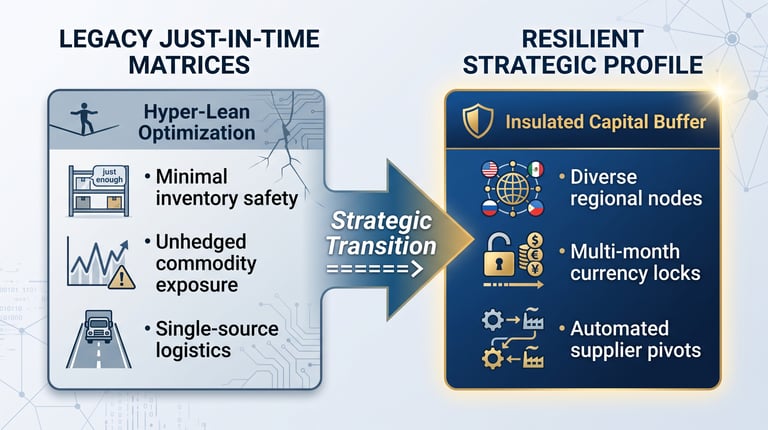
Protecting margins requires implementing three defensive corporate frameworks:
Active Commodity Hedging: Corporate treasury teams should use financial derivatives, such as futures and options contracts, to lock in energy and transport costs months in advance, stabilizing the firm's cost base during sudden market jumps.
Geographical Supply Decoupling: Move away from relying on a single manufacturing or transit region. Cultivating alternative, localized supply networks reduces dependencies on volatile global choke points.
Dynamic, Algorithmic Pricing: Update enterprise software systems to connect raw material cost tracking directly to customer pricing engines, allowing the firm to adjust product prices in real time to protect margins during a crisis.
The return of $95-per-barrel oil should serve as an immediate corporate wakeup call. Geopolitical stability can no longer be assumed as a baseline baseline for international trade.
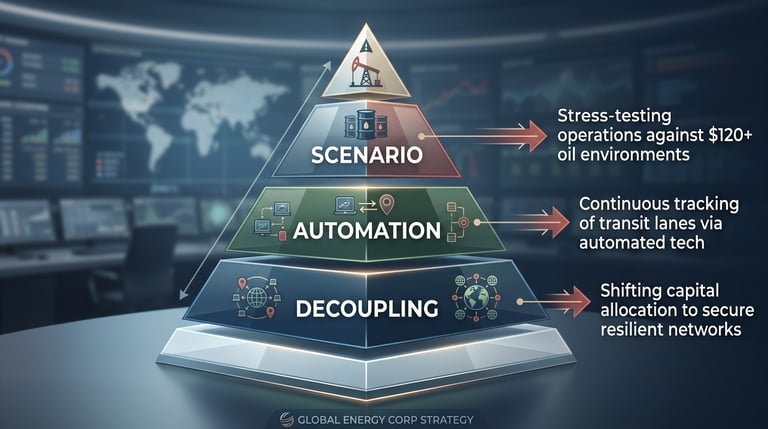
Modern corporate governance requires board members to run regular, rigorous scenario simulations, stress-testing their company's cash flows against extended energy spikes or prolonged transit closures.
Ultimately, the competitive advantage in a volatile global economy belongs to the organizations that can adapt fastest. By proactively investing in supply chain flexibility, energy hedging, and resource diversity, future business leaders can turn global volatility into an opportunity to out-maneuver less prepared competitors.
Contact
Questions? Reach out anytime.
© 2025 BizSphere. All rights reserved.