
The Work-Life Rebalance: Practical Strategies to Prevent Burnout and Reclaim Family Time
by Divya
5/26/20264 min read


We live in a culture that treats constant busyness as a badge of honor. Because of this, the boundary between our professional careers and personal lives has almost completely disappeared. With laptops on our kitchen counters and work emails notifications on our phones, we are always connected to the office.
This constant connection comes at a high cost. Burnout damages our physical health, lowers our productivity, and strains our most important relationshipsTrue work-life balance is not an impossible dream or a perfect 50/50 split of your hours. Instead, it is about setting deliberate boundaries, managing your . energy, and protecting your personal time.
This guide provides practical, actionable strategies to help you stop the cycle of burnout, perform well at work, and fully show up for your family.
The True Cost of Chronic Burnout
Burnout is more than just feeling tired after a long week. The World Health Organization (WHO) classifies burnout as an occupational phenomenon caused by chronic workplace stress that has not been successfully managed. It is defined by three main signs:
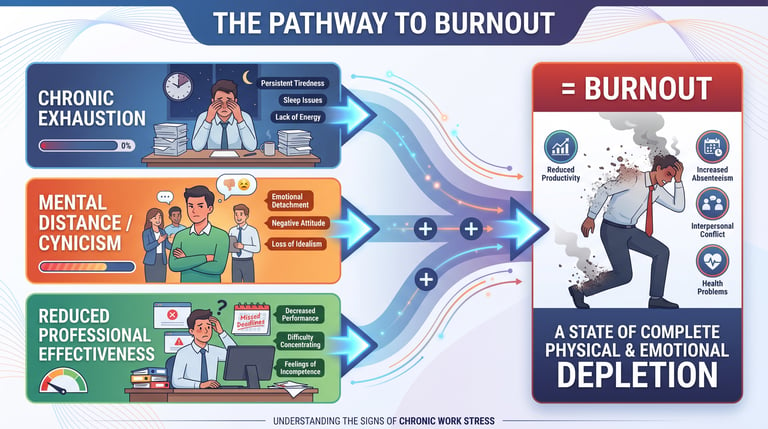
When you experience burnout, you cannot simply leave it at the office. The chronic stress follows you home. It shows up as irritability with your partner, exhaustion when playing with your children, and a total lack of energy for your hobbies. To break this cycle, you must stop treating your time as an infinite resource and start managing it with clear boundaries.
Structural Boundaries to Separate Work and Home
If you do not intentionally set boundaries for your job, your work responsibilities will naturally expand to fill all your available time. Use these structural strategies to separate your professional life from your personal life.
1. Create a Digital Sunset
The most invasive connection to your workplace is the smartphone in your pocket. To reclaim your evenings, set a strict Digital Sunset every day.
Choose a specific time every night (for example, 6:30 PM) to stop checking work communications.
Turn off push notifications for Slack, Microsoft Teams, and corporate email after hours.
If your job requires you to be on-call, set up specific emergency filters so only urgent phone calls can get through, while routine notifications remain silent.
2. Establish a Transition Ritual
When you work from home or commute in silence, your brain needs a clear signal that the workday has ended. Without a transition ritual, you might bring your workplace stress straight to the dinner table.
If you work remotely: Shut down your laptop, close your office door, and take a 10-minute walk around the block. This acts as a "fake commute" to help clear your mind.
If you commute: Use the drive or train ride home to transition. Avoid taking work calls in the car. Instead, listen to music, an engaging audiobook, or a podcast to shift your focus away from tasks.
3. Set Up Physical Work Zones
If you work from home, avoid checking emails or writing reports in bed or on the couch. Mixing your workspaces with your relaxation areas makes it difficult for your brain to unwind. Dedicate a specific desk or room solely for work. When you step away from that space, you are officially off the clock.
The Energy Management Matrix
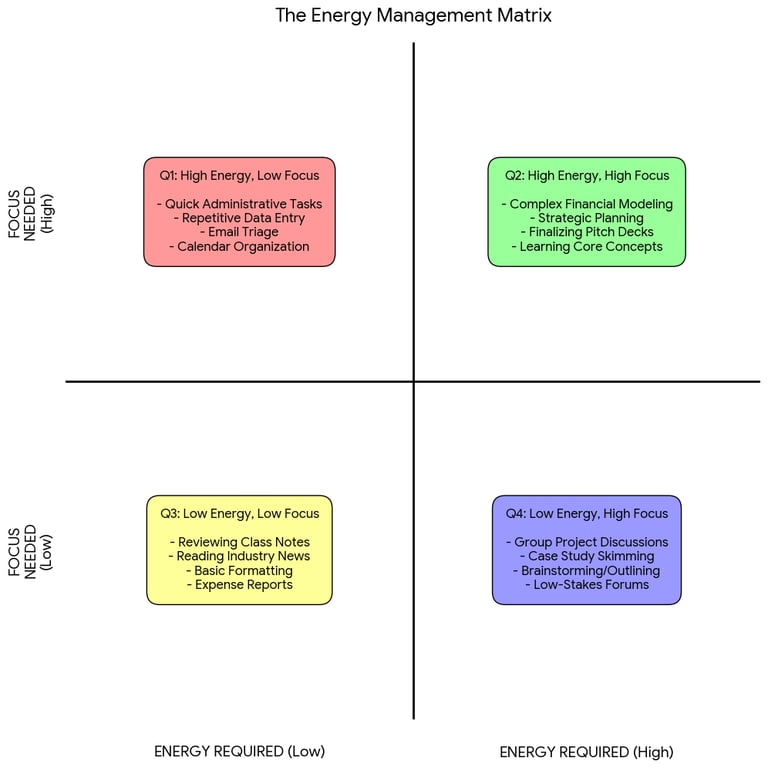
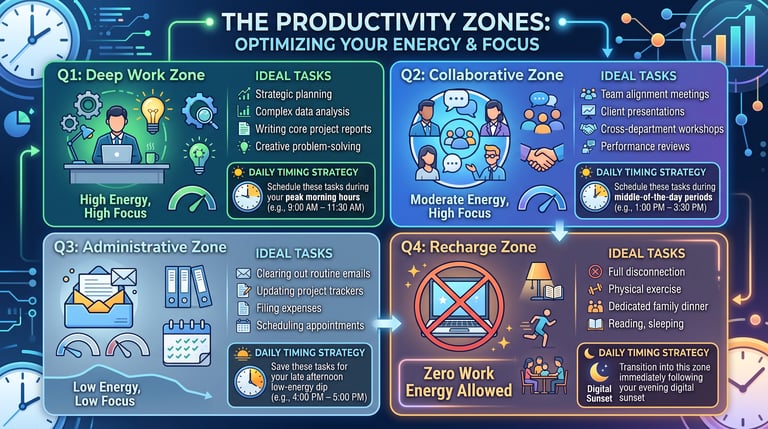
Time management templates often fail because they treat every hour of the day the same way. In reality, your energy levels change throughout the day.
To protect your time with family without hurting your career performance, organize your tasks using this Energy Management Matrix.
Quality Over Quantity in Family Time
Reclaiming your life does not require adding five extra hours of family time to your day. What matters most is the quality of attention you provide during that time. Thirty minutes of completely uninterrupted, focused connection is far more meaningful to a child or partner than three hours of distracted time spent staring at a phone screen.
Apply the "First 30 Minutes" Rule. The first half-hour after you finish work sets the tone for your entire evening. Dedicate this brief window entirely to your household.
Put your phone in another room or inside a drawer.
Sit down with your partner or children and ask about their day.
Avoid checking emails or cleaning up during this time.
This simple habit helps your family feel valued and secure, and it allows you to transition smoothly out of your work mindset. Schedule Non-Negotiable Family Appointments- Treat your family commitments with the exact same respect you give to a meeting with an important client.
Block out recurring family events directly onto your calendar, such as "Friday Family Movie Night" or "Tuesday Park Outing."
If a work request conflicts with these blocks, treat it like any other scheduling conflict: "I have an existing commitment at that time, but I can address this first thing tomorrow morning."
Actionable Burnout Prevention Checklist
Use this practical checklist every week to evaluate your work-life balance and adjust your habits before burnout takes hold:
Review your calendar and delete or decline at least two non-essential meetings or commitments.
Set a hard stop time for your work hours at least four days out of the week.
Turn off work notifications on your mobile devices during weekends and evenings.
Plan at least one specific family activity or date night and protect that block of time.
Take your lunch break away from your screen to give your mind a true midday rest.
Say no to an extra project or volunteer task that does not directly support your core goals.
Dedicate 15 minutes each night to an activity that recharges you, like reading, stretching, or light exercise.
Explore More Business Articles
Contact
Questions? Reach out anytime.
© 2025 BizSphere. All rights reserved.